Multimedia Story: Camping Trip to Elk Falls Provincial Park
Introduction
For my multimedia story, my friends and I spent a weekend camping at Elk Falls Provincial Park near Campbell River. Due to the weather, the activities of the trip changed from the original plan, but it was still an overall success and a fun time. This multimedia story will be reflected through the sharing of text, videos, images and audio. Beyond the trip itself, this story will provide a look at Mayer’s Principles of Multimedia, and how content can be strategically formatted to enhance a reader’s experience.
First Night
This trip first started with a drive from Victoria to Campbell River. Knowing that I needed to protect myself and my gear, I made sure that I was fully packed with essentials like portable chargers and waterproof clothing before heading off with my friend. The closer we got to Campbell River, the worse the weather seemed to get. We finally arrived at the campsite at 7:30, after about four hours of driving, with the rain pouring. The rain continued as we set up our tents and made dinner, but we weren’t worried, as it was scheduled to end later in the evening. It rained throughout the night, and we all had pretty poor sleep, waking up at 5am in the morning.
Saturday Exploring
Elk Falls Suspension Bridge
After waking up early, we decided that it would be best to head out right away to start exploring, and headed to our first location: the Elk Falls Suspension Bridge. Because it was still raining, we made sure to bring our waterproof gear to protect our devices, as well as some warmer clothing. Thanks to the early hour and the weather, we had the entire trail to ourselves. The walk through the trees was incredibly peaceful, with the trail opening up to a massive waterfall.
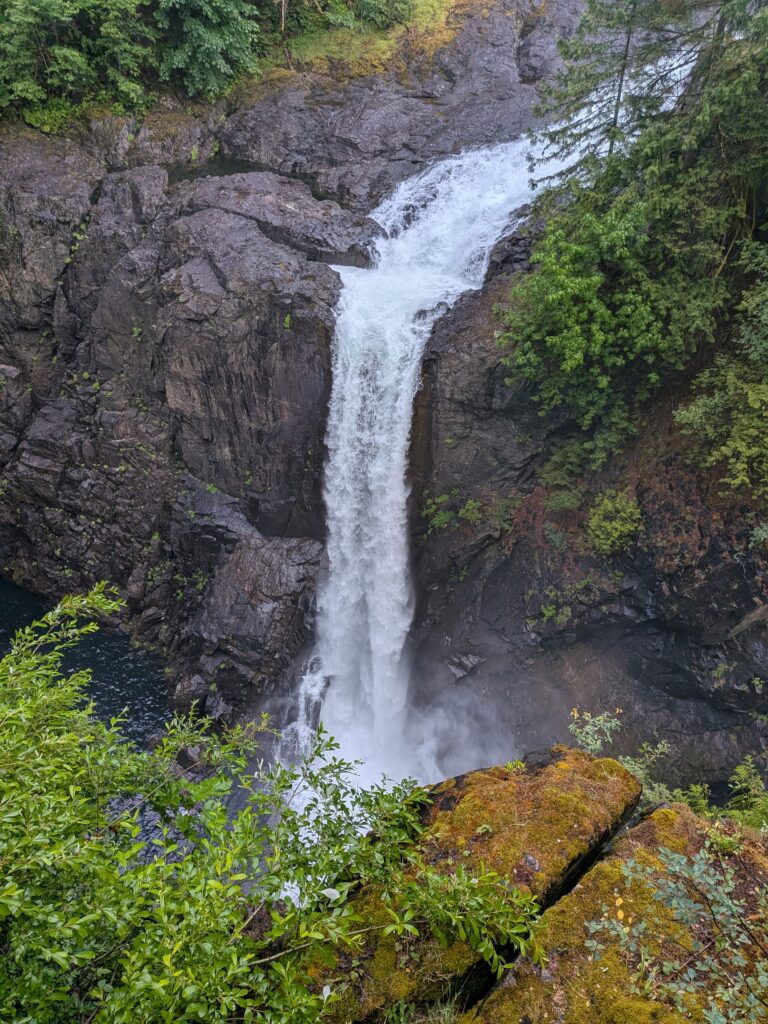
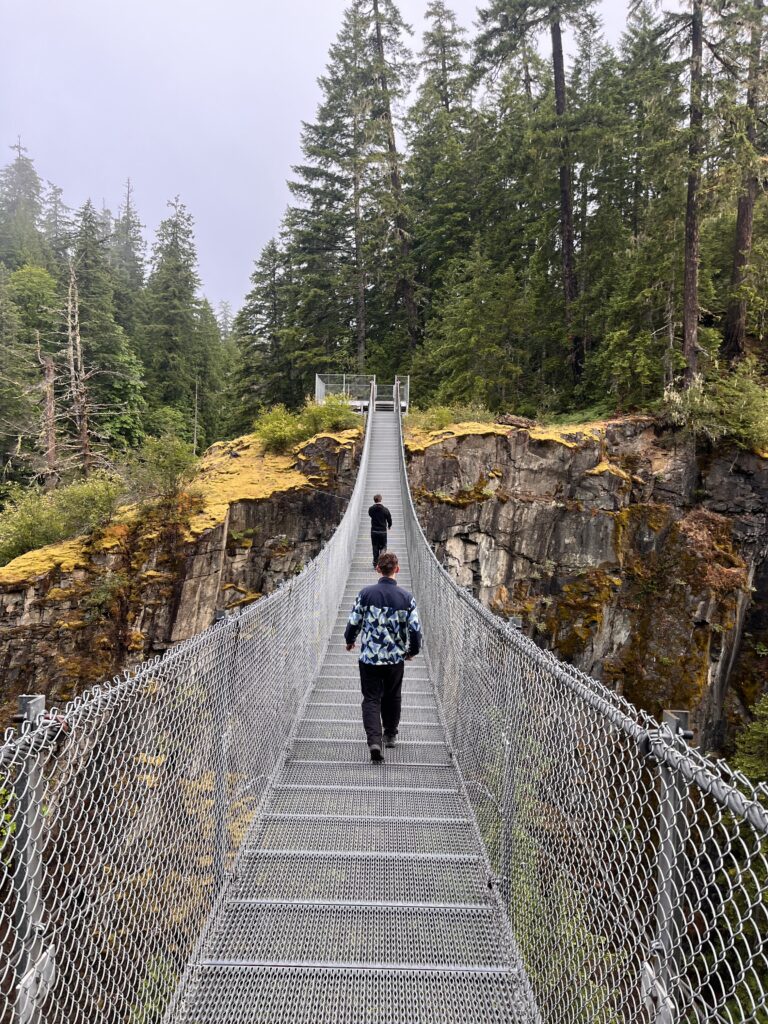
Overlooking the 25-metre-tall waterfall you could see it thundering into the water below, creating a mist that surrounded the area.
One of the special features of the hike was the suspension bridge, which hangs at over 200 feet, providing a view of the falls and the surrounding area. Although I am not a fan of heights, it was very cool to be able to overlook the canyon floor in the very center.
Walking through the trail was the perfect time to talk with my friends, and fully take in the scenery before reaching the main viewing area. Placing the two images side-by-side helps capture the scale of the canyon by showing the size of the waterfall and emphasizing the height of the suspension bridge.
Oyster River Potholes
Next, we went over to the Oyster River Potholes, which was a short walk to the viewpoint on the side of the river. The shapes carved into the rocks over millions of years were highlighted by the glassy emerald-green water, which stood out even more under the overcast sky.
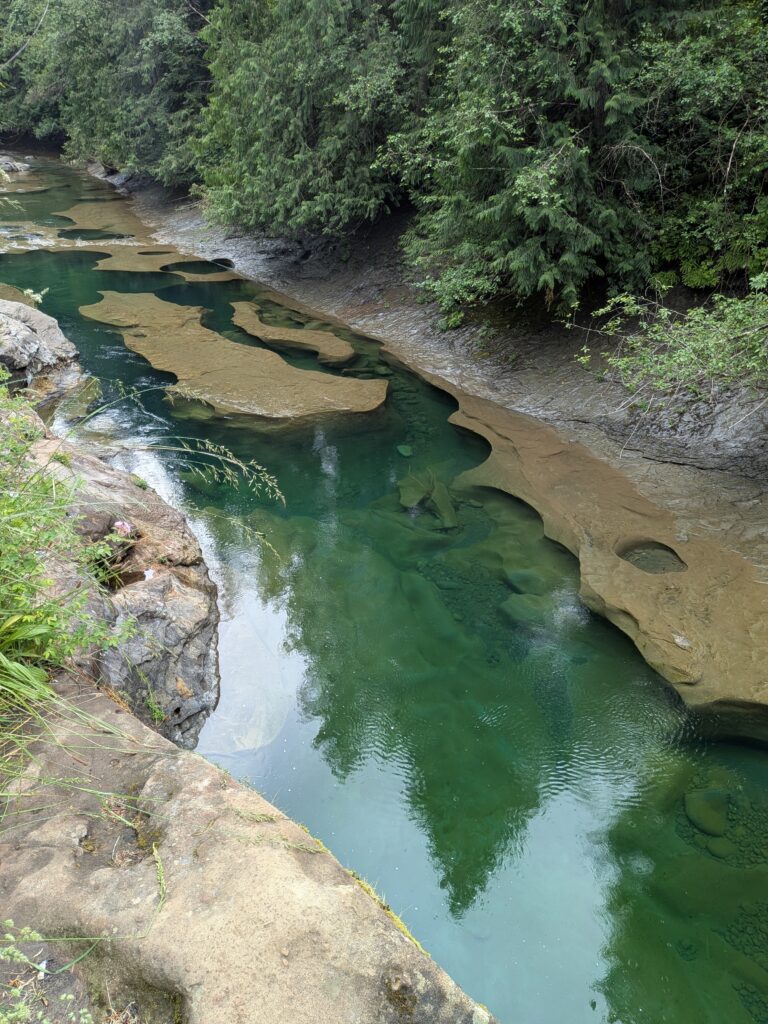
The audio recording of the potholes is a peaceful pairing with the image, as you can hear the rushing of the faster water upstream, and the birds chirping in the trees.
Back to the Campsite
After exploring a bit of the Campbell River downtown, we returned to the campsite to socialize, eat and relax. By the time we had returned, the weather had finally improved and a clear, blue sky was a welcome change for the day. We were finally able to take off our damp clothes, set up our chairs, and enjoy the weather.
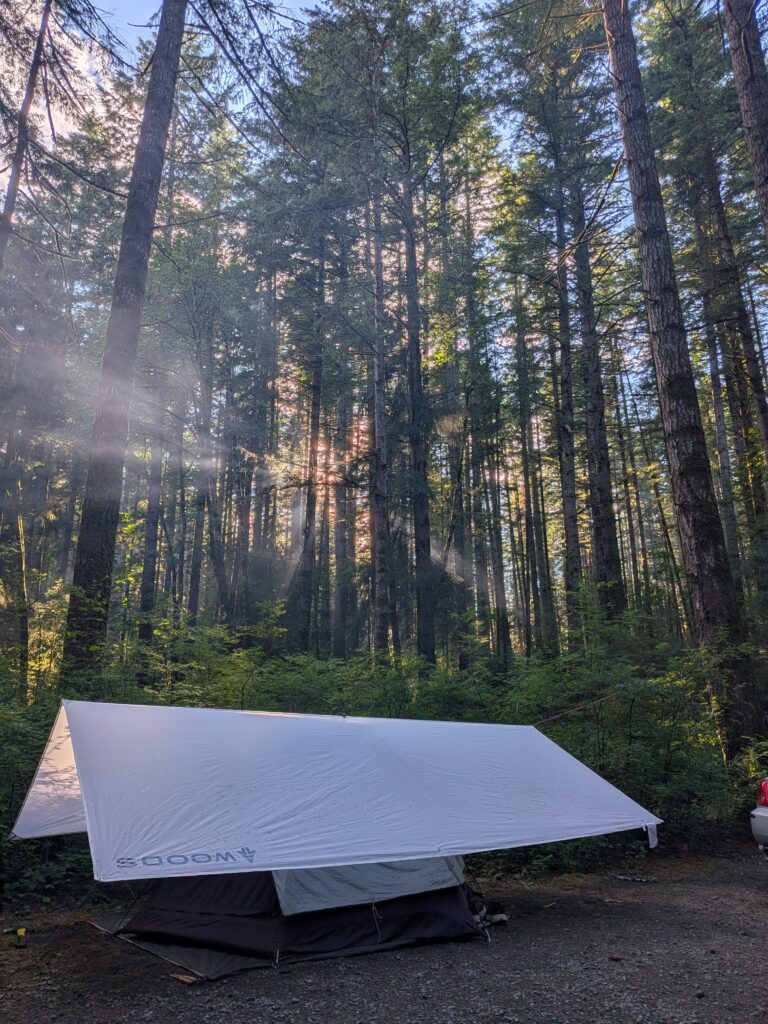
This image perfectly captures the change in weather, with rays of sunlight scattering through the trees. The change in lighting compared to the images taken earlier in the day highlights the positive turn in weather.
Campfire
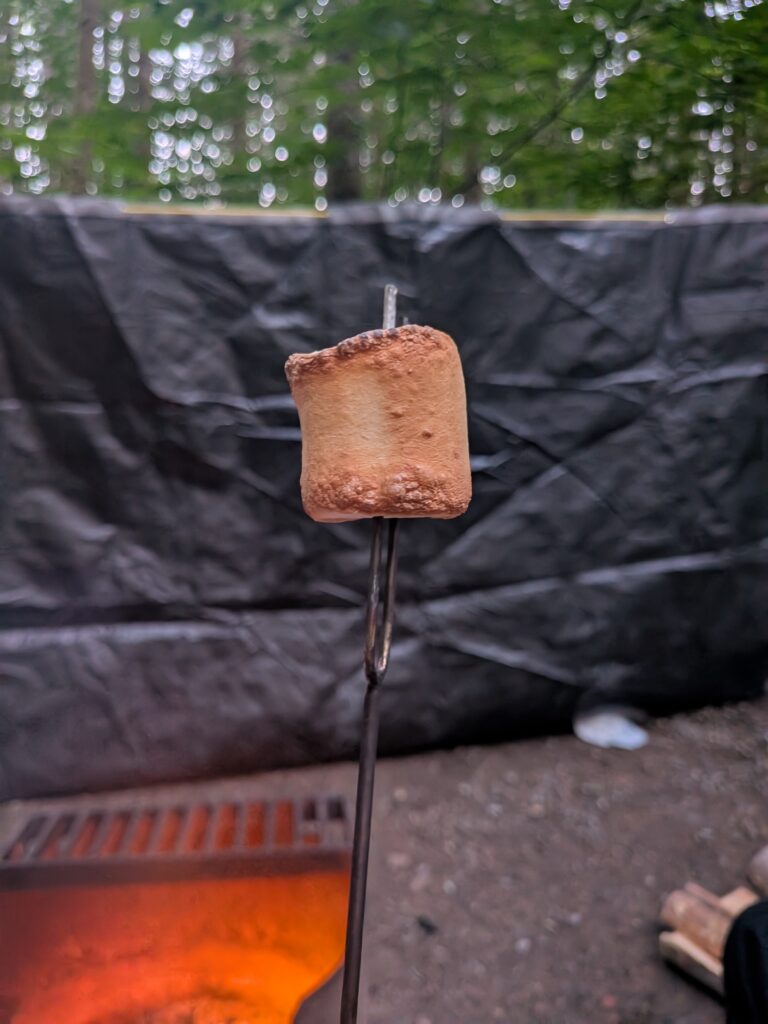
As it got later in the evening, we lit the campfire, ate our dinner, and then sat in our chairs to socialize. The cool air made the warmth of the fire even more enjoyable as we started to make s’mores. I was particularly proud of this perfectly toasted marshmallow, as I have a knack for burning them.
As the night wound down and the sun had set, the crackling of the fire was the perfect end to the memorable day.
This video serves as an audiovisual close to the story, letting the calming, crackling sounds of the fire serving as a natural conclusion to the day, and to the adventure.
Reflection, Decisions and Challenges:
This multimedia story definitely made me have to think differently in a variety of ways. To start, I noticed that this was the first time I ever took pictures with the purpose of showing others. Whenever I take images of my adventures, I find that I don’t need to put much thought into them, as they are meant for me, whereas images meant for others required more intent and thought put behind them. Understanding Mayer’s Principles of Multimedia Learning allowed me to come up with specific ways in which to organize the story, and what learning techniques should be leveraged to create an engaging, informative and cohesive story.
Much of the decisions I had to make related to which types of media I wanted to include at different points in my story. For example, when writing about the Oyster River Potholes, I originally planned on including a video of the area. However, the video didn’t turn out how I liked, so I decided that converting it to an audio recording provided better value. Another decision I made when creating this story was to omit some of the other minor activities that happened during the day. As I was writing, I found that they did not bring anything new to the story, and as the length increased, the story felt more fragmented, reducing its overall quality. In the end, by filtering out those details I was able to put more emphasis on the important aspects of the story and provide a flowing narrative of the day.
During my trip there were a few challenges that I faced. The first was due to the weather upon arrival, as it greatly changed our plan for the following day. This became a challenge, as I was unsure as to how to best create a story when the following day was uncertain. In the end, I decided that it was best to embrace the unpredictability of the day, and weave it into my overall plan regardless of what we did. I was fortunate that in the end, the weather improved and I was able to share an enjoyable and relaxing evening.
Another challenge I found was ensuring that I was capturing enough media during the trip, and taking time to reflect during the quiet moments. It can be so easy to fall into the rhythm of the day and completely forget to take pictures or videos of what is being done, but also important to not stay so focused on capturing media that it takes you out of the moment. For this reason I thought that it would be best to enjoy the time with my friends while I travelled to the destination, and then reserve a period of time to capture the media. This way, I was able to enjoy the moments, which made later reflection easier, while ensuring that I captured sufficient content for readers.
Mayer’s Principles of Multimedia Learning
This story integrates four separate media formats to improve a readers experience, including: text, image, audio, and video. On their own however, these media formats fail to provide readers with useful content. This is why it is important to both consider and use Mayer’s Principles of Multimedia Learning. My multimedia story contained 5 main principles: Redundancy, Coherence, Signaling, Segmenting and Contiguity.
Redundancy Principle
The Redundancy Principle can be difficult to illustrate, as its proper use results in a lack of redundant material. An example of this principle being applied was when I chose to remove the video of the Oyster River potholes, instead opting for an audio track. This decision allowed me to highlight the peaceful scenery rather than overwhelming readers with a poor quality video.
Coherence Principle
This principle was used when I chose to reduce the number of activities discussed during my story. This choice was made to be able to highlight other aspects of the story that I thought were more important. If I had left in these fragmented pieces of the story, its overall impact would have been greatly reduced.
Signaling Principle
For this story, the Signaling Principle is used throughout. It can be most easily seen by the use of headers and subheaders, allowing readers to intuitively understand the flow of the story. Furthermore, I ensured that formatting was kept consistent throughout the story to keep useful information, such as introductory sentences, in predictable locations.
Segmenting Principle
The Segmenting Principle played a large role in the layout plan of this story. Rather than presenting my camping trip as a continuous story, nonending story, I chose to break it up into chronological sections, separated by headers and spacers. This ensured that readers were not overwhelmed by the volume of content, and are able to read sections at their own pace. It also allows readers to get as much out of the story as possible.
Contiguity Principle
I applied the Contiguity Principle by ensuring that my images, videos and audio tracks were embedded directly within the relevant sections of the story, rather than placing them without context. Furthermore, I applied this principle by writing introductory or explanatory sentences above or beside the types of media. Keeping these elements close to one another allows readers to quickly understand the context behind what is being presented to them.
Incorporated Feedback
For this assignment the main feedback that I incorporated was to simplify the content. At first, I was planning on adding a much larger number of images and include more details about my day, but was advised that this could become too difficult to follow. Incorporating this feedback allowed me to avoid causing extraneous cognitive load to the readers.